July 7, 2026 · by Oleg Melnikov
How does the LinkedIn algorithm work?
How does the LinkedIn algorithm work? Most answers are a list of tricks. Post at 9am. Use three hashtags. Nobody tells you why the feed behaves the way it does. The why is simple: money. Follow the money and every strange thing about LinkedIn starts making sense.
Why does LinkedIn show you what it shows you?
LinkedIn belongs to Microsoft, and Microsoft is not sentimental about it. The annual report says it plainly: LinkedIn’s growth depends on member engagement. The chain is short.
“Growth will depend on our ability to increase LinkedIn member engagement on the platform.”
So LinkedIn has exactly one job: build a feed so good you keep scrolling. Every algorithm decision serves that job. Keep this one idea in mind and the rest of this post is almost obvious.
How did the algorithm change?
For years the feed was network-based. You posted, your connections saw it, and if they engaged, their connections saw it too. That system was easy to game. Engagement pods, follower counts, and recycled viral hooks filled the feed with junk, and junk does not keep people scrolling.
So LinkedIn rebuilt it. In 2025 the company published the paper on its new ranking model, a 150 billion parameter AI called 360Brew. The new feed does not care much about who you know. It reads what you write, understands what it is about, and shows it to people who care about that topic. A “For You” page, in a suit.
What happens after you hit post?
Every post runs the same gauntlet. Understand it once and you stop blaming the wrong things.
Notice what is missing from that journey: your follower count. It matters far less than it used to, and I can prove it.
Can a small account still get reach?
This is the part most founders do not believe, so here are my own numbers.
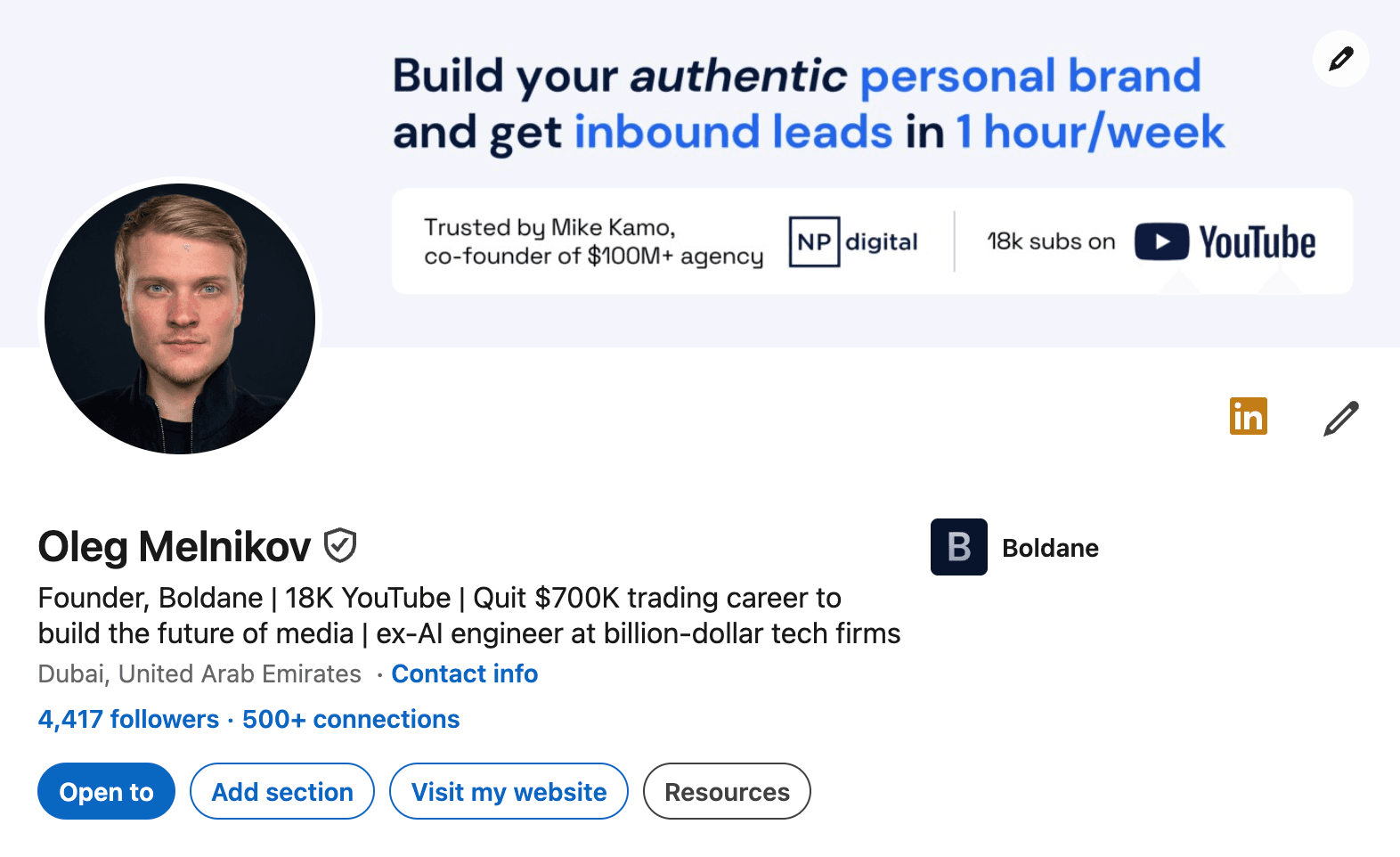
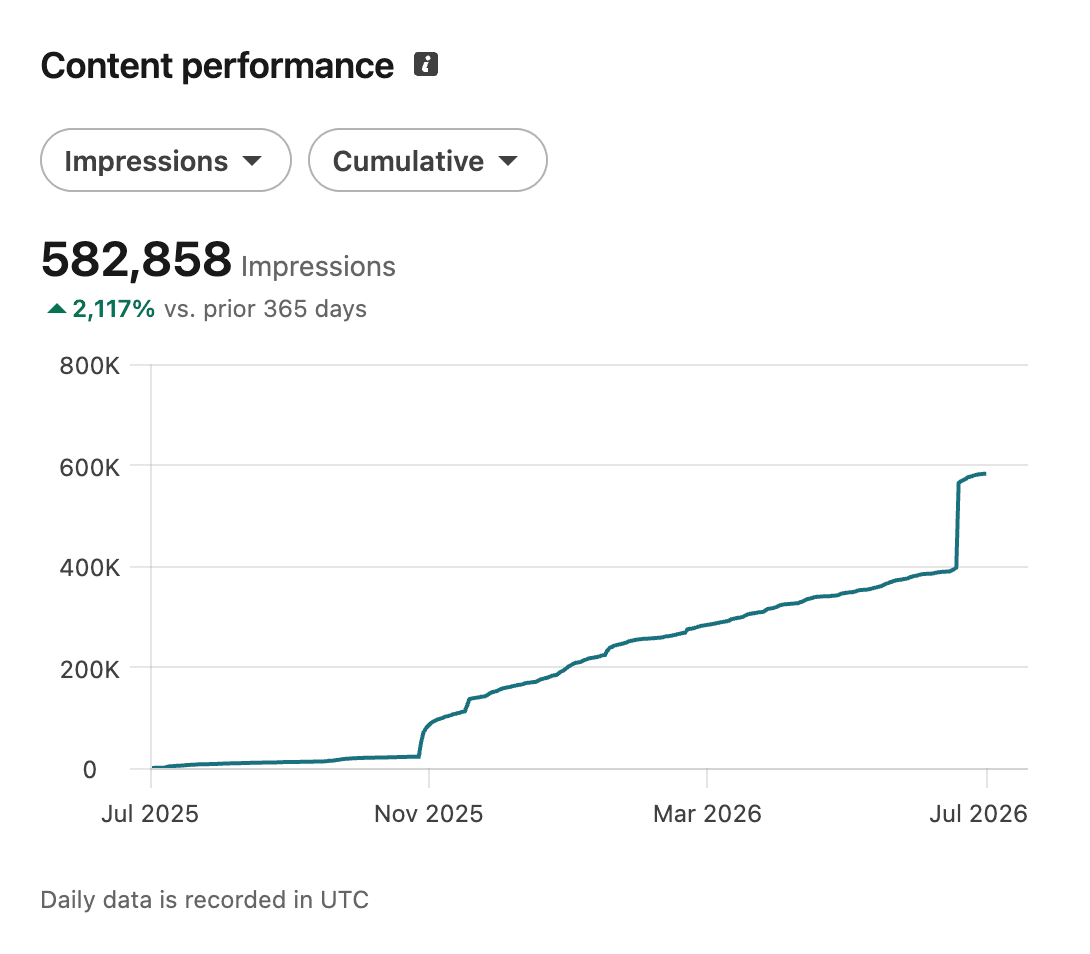
About 4,400 followers. 582,858 impressions in a year, over 130 times my follower count. Not because I am special. Because the new feed rents you an audience, one good post at a time. Ten years ago you needed to build the audience first. Now you need to be worth matching. Our clients see the same pattern.
What kind of posts win now?
Here is what I see with clients every week. When someone’s reach is dead, it is almost never the posting time or the hashtags. It is that the posts are generic.
Vague advice used to work. In 2022, maybe 2023, you could post “consistency is key” and grow. Then ChatGPT and Claude made generic content free, and now there is an infinite supply of it. Even when the advice is good, nobody stops on it.

“What wins is something that comes directly from you, something nobody else can say. Specific numbers, specific stories, specific characters, specific hot takes. That stands out. And that wins reach.”
Excited to share some lessons from a recent client project. We improved their processes and the results were amazing. Consistency and hard work always pay off. Agree?
A printing company in Austin. $12M a year. Their line kept stalling at one approval step, so orders sat for days. We cut the step. Shipping time dropped by half. The lesson cost them years: your bottleneck is usually a person, not a machine.
Specifics are the last thing that cannot be copied. A real number. A real place. A real person. A real opinion that costs you something. Finding those details is work: you have to use your brain and your memory instead of asking a chatbot. That is exactly why it stands out, and the feed measures the difference in seconds of attention.
What does the algorithm reward, and why?
What should you do this week?
- Reread your last five posts. If a competitor could have written them word for word, the feed has nothing to match.
- Take your most generic draft and add one real number, one real place, one real person. Watch what happens.
- Not sure what to write at all? Start with the three pillars framework.
The algorithm is not a slot machine. It is a matching machine. It is trying to find the people who need what you know, and it can only match what you actually give it. Give it something specific.