July 7, 2026 · by Oleg Melnikov
What should founders post on LinkedIn?
Every founder asks the same question sooner or later: what should founders post on LinkedIn? Most answers are a list of 50 generic prompts you will never use. This is the framework we use at Boldane to write five posts a week for real founders, plus seven real posts with real numbers so you can see it working.
Start with three pillars
Every post you write fits one of three pillars. If you rotate through them, you never run out of ideas and your profile never turns into a one-note sales page.
Thought leadership is your take on your industry: reacting to news, sharing what you see inside your work, making predictions. This is what makes buyers trust your judgment.
Business is what you are building: behind the scenes, updates, and case studies. Proof that the work is real.
Personal is you: your thinking, your lessons, the occasional fun post. People buy from people, and this pillar is why they remember you and root for you.
How much of each? The 70/25/5 funnel
Think of your content as a funnel. Each stage has one job, and each stage should get a very different share of your posts.
Top of funnel gets eyeballs onto you: broad, relatable posts that people outside your bubble understand. Middle builds trust and credibility: your expertise, your stories, your case studies. Bottom converts: the direct ask, the offer, the call.
Most founders get this exactly backwards. They post offers and company news 70% of the time, wonder why nobody engages, and quit. The math only works when the vast majority of your content gives something to people who will never buy. They are the ones who carry your reach to the ones who will.
Which format reaches the most people?
The Shield Index analyzed 50,000 LinkedIn posts in February 2026 and measured reach rate by format: how many impressions a post earns compared to the author’s follower count.
Two things stand out. Image and text posts lead at every level, and when a post takes off, plain text goes the furthest: the top 1% of text posts reach eleven times their author’s audience. And video, despite all the noise about it, reaches the fewest people on LinkedIn at every single tier. You do not need a camera crew. You need a strong idea, written plainly, usually with one good image.
Seven real founder posts, categorized
Theory is cheap, so here are real posts: from our clients in cybersecurity, recruiting, and marketing, and from my own profile. Each one is labeled with its pillar so you can see the framework in the wild.
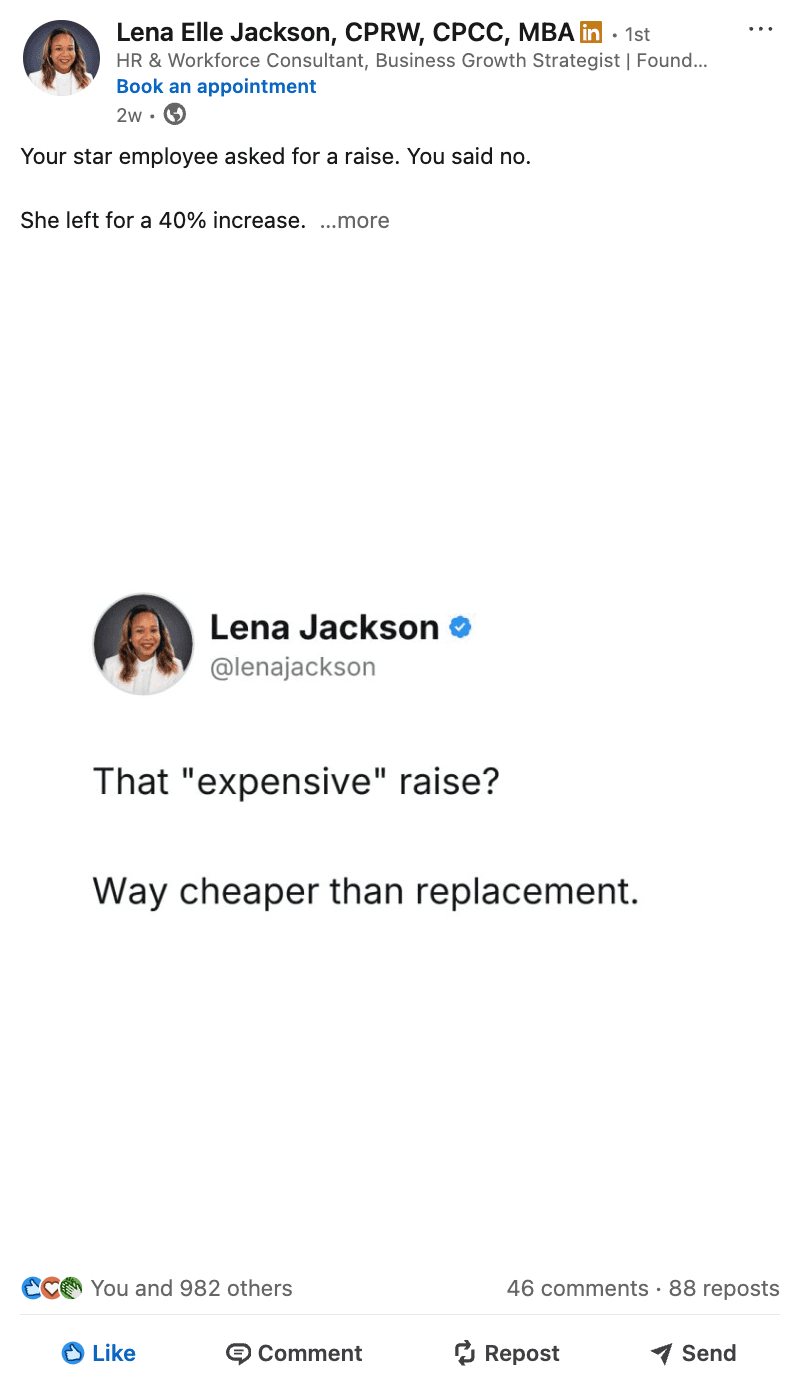
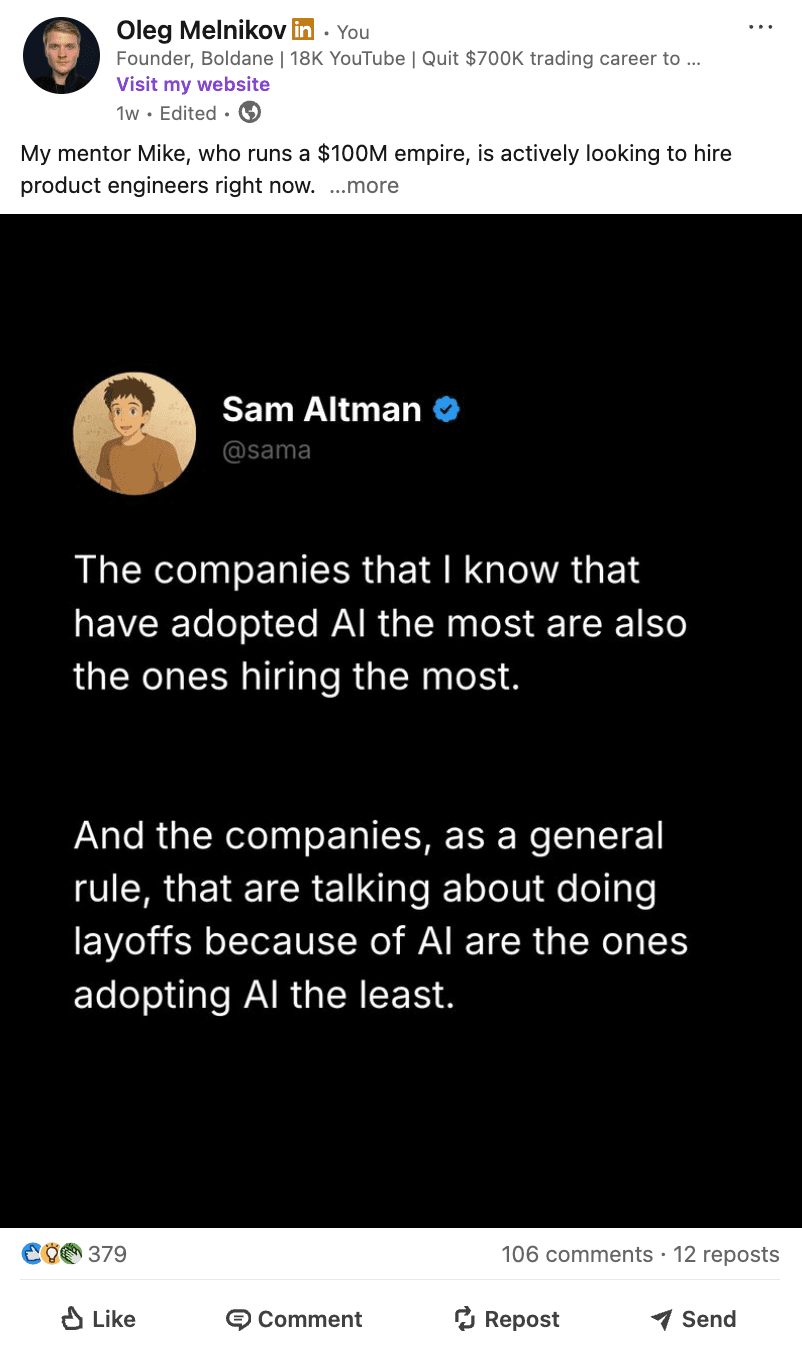



Notice what these have in common. A first line that stops the scroll. A real story or a real opinion, not advice recycled from someone else. And numbers in the text where numbers exist. You can see more client work on our results page.
How often should founders post?
Consistency beats intensity, every time. Buffer’s analysis of two million posts found that steady posting a few times a week outperforms bursts followed by silence. Our clients publish five posts a week, one every weekday, because staying visible daily compounds. But five great posts a month beat twenty forgettable ones. Start where you can stay consistent. I wrote a full answer in how often should founders post on LinkedIn.
The mistakes that kill founder content
- Pitching in every post. That is a 70% bottom-heavy funnel. Flip it.
- Chasing likes instead of trust. Likes are nice, but trust is what turns into deals. One post built on real expertise got our client Jon 10 sales calls and a $12,000 deal in his first three weeks.
- Posting generic AI filler. Your buyers can smell it, and it teaches them your judgment is outsourced. Every post should come from what you actually think and did.
- Quitting at week three. First real engagement usually takes a couple of weeks. First sales calls take two weeks to two months. Averages, not promises, but the founders who win are the ones still posting in month three.
Where to start this week
Pick one pillar per weekday you can manage. Write one thought leadership post about something happening in your industry right now, one business post showing real work, and one personal post about a lesson that cost you something. Keep the offer for later, once people know who you are.
And if you would rather spend one hour a week talking while a team turns it into five posts like the ones above, that is exactly what we do.